HOW | SHOWING THE MAKING: THANDI NTULI
“That’s where music starts for me. I’m a pianist who’s grown up playing classical piano, but really everything about my formative experience of music comes from my home.” – Thandi Ntuli
On Friday 20 February, the South African jazz pianist, composer, arranger, and singer-songwriter Thandi Ntuli opens her HOW | Showing the Making by performing ‘Nomayoyo (Ingoma ka Mkhulu)’. It’s a hymn that was written by her grandfather, Levi Godlib Ntuli.
Ntuli grew up in a household filled with music, where singing was a collective and communal act present at church and during family gatherings. This was an environment she was born into – her journey as a musician starting well before she began playing classical piano at the age of four.
EARLY INFLUENCES & MOVING FROM CLASSICAL TO JAZZ
Over the course of the HOW, Ntuli talks the audience through these early encounters with music, with the piano, and with composition. She recalls the afternoons spent practicing indoors, while her friends played outside, and how her brother would throw playful provocations at her as she practiced – “play it like a bird!” Later, in high school, she’d take this sense of play and apply it to the works of composers she’d be studying at the time, such as Debussy, and see what emerged. It was only later that she came across the idea of improvisation in the formal sense.
And so the diligent student of classical music began exploring jazz for the first time, if only to better understand how to improvise and create her own songs. From the great classical composers to the music contemporary African jazz musicians like Moses Molelekwa, Bheki Mseleku, and Oumou Sangaré, Ntuli’s references and points of inspiration grew, became more local, more resonant.
LEARN THE TECHNIQUE, THEN PLAY WITH IT
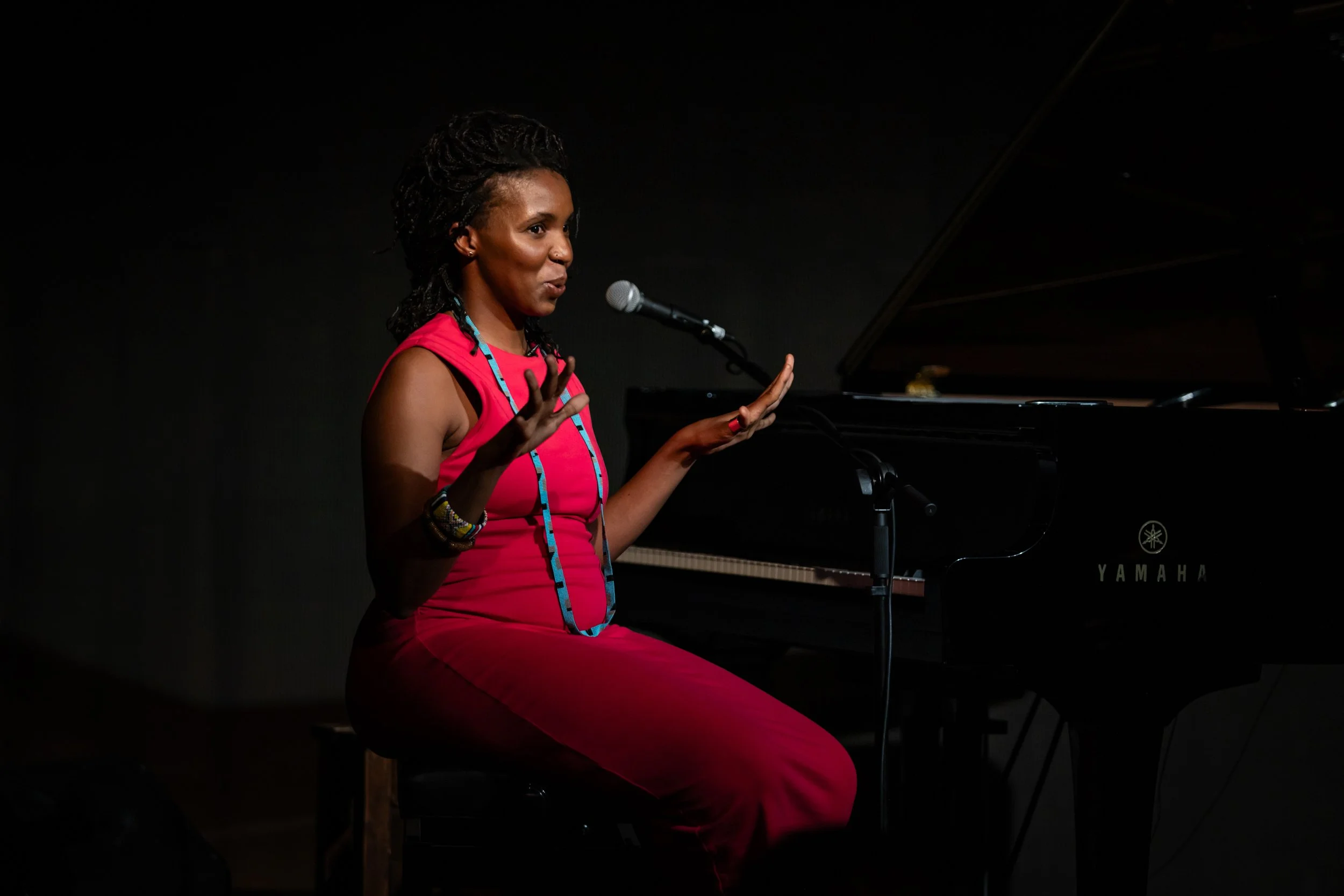
Play, improvisation, and experimentation need to be held by technique. Using Bheki Mseleku’s composition ‘One for all, all for one’, Ntuli demonstrates through live performance, a few of the techniques that have been central to her journey as a musician.
Transcription, she explains, is a way of listening with intention. This simple, but essential act of listening deeply to a piece of music and replicating it, either for notation or simply for performance, is a way of learning through doing. It’s into this technique, she explains, that she can begin to play and improvise. “I change the key so that I’m uncomfortable… I’m looking to find things that I like or don’t like, or even find mistakes that lead me to somewhere.”
Oftentimes, she discovers chords she really enjoys, and a key change that offers a different feel or musical quality. These discoveries made in the process of transcription and play, become little motifs, refrains, or tools that she keeps in her repertoire. “Really, that's what jazz is, that’s what the language is,” she explains. “Musicians are quoting one another, pulling from particular eras and [placing these styles and influences] into their own work, in their own ways.”
COLLECTIVE COMPOSITION, ALONE
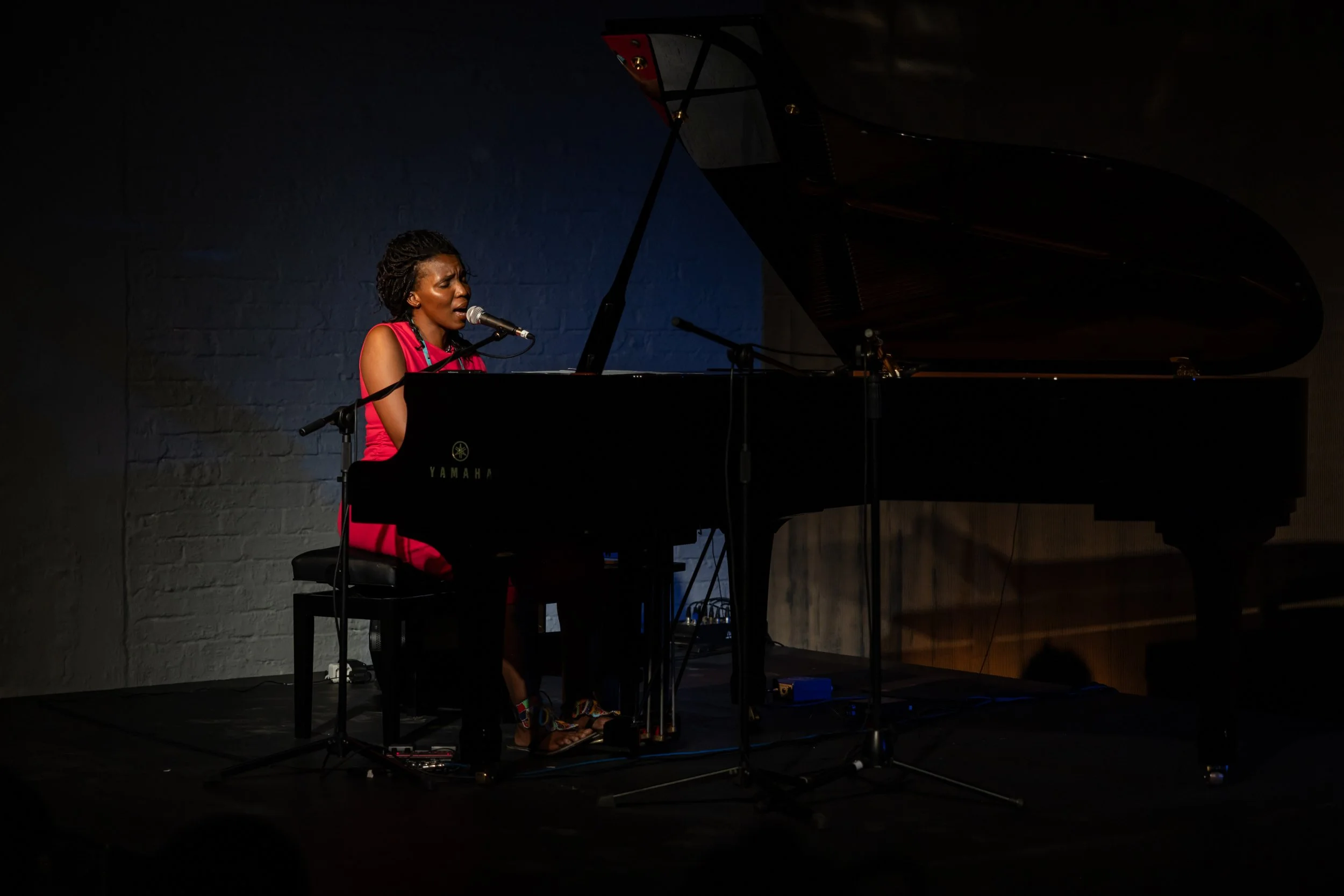
For Ntuli, music is a collective and collaborative act. But how to compose in a collective way when one is alone in the studio? Using a loop pedal, she explains, is a way of bringing a whole band into the room. By performing a piece of music on the piano, and laying it down and looping it, Ntuli demonstrates her process of composing for multiple instruments, while working independently. To work in this way, however, is only possible when one embraces the methodology of collective play and improvisation, as Ntuli does.
EMBRACING THE SPIRIT OF THE MUSIC
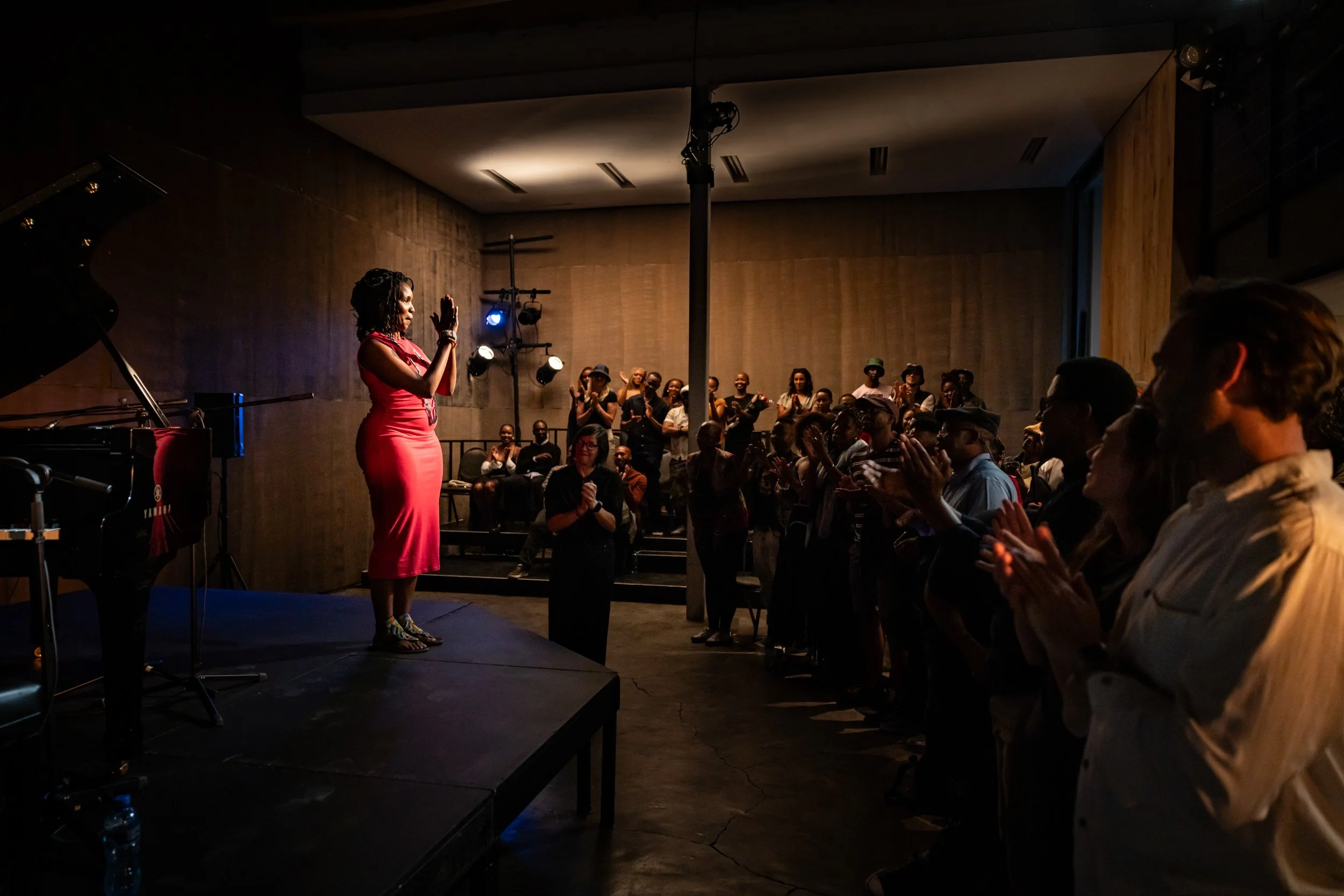
“There’s a part of music that can’t be written down or taught in universities and that’s the spirit,” says Ntuli.
Being open to happenstance, to chance encounters and organic influences while making music is to acknowledge music as a spiritual act, she explains. Because when you’re making music, you’re never doing it alone – you create your work within a lineage, and within a broader community of musicians, muses, and ancestors. It is an inherently collaborative act.
Similarly, Ntuli speaks of her album Exiled as being an essential moment for her. “I learned to surrender to the music, and to realise that the music is teaching me.” This act of chanelling a particular message through music is also a deeply spiritual process, mediated through Ntuli’s way of composing and performing music. “I actually write the music, take it to studio, perform it, and in process, my spirit is growing, my consciousness is growing from that. That’s a huge part of creating, of any kind I think, that cannot be explained and cannot be studied, it’s just something that you feel,” explains Ntuli.
— David Mann
CREDITS
MUSICIAN | Thandi Ntuli
MOMENTEUR FOR THE SO ACADEMY | Athena Mazarakis
PHOTOGRAPHER | Zivanai Matangi