THINKING IN MAFUBE
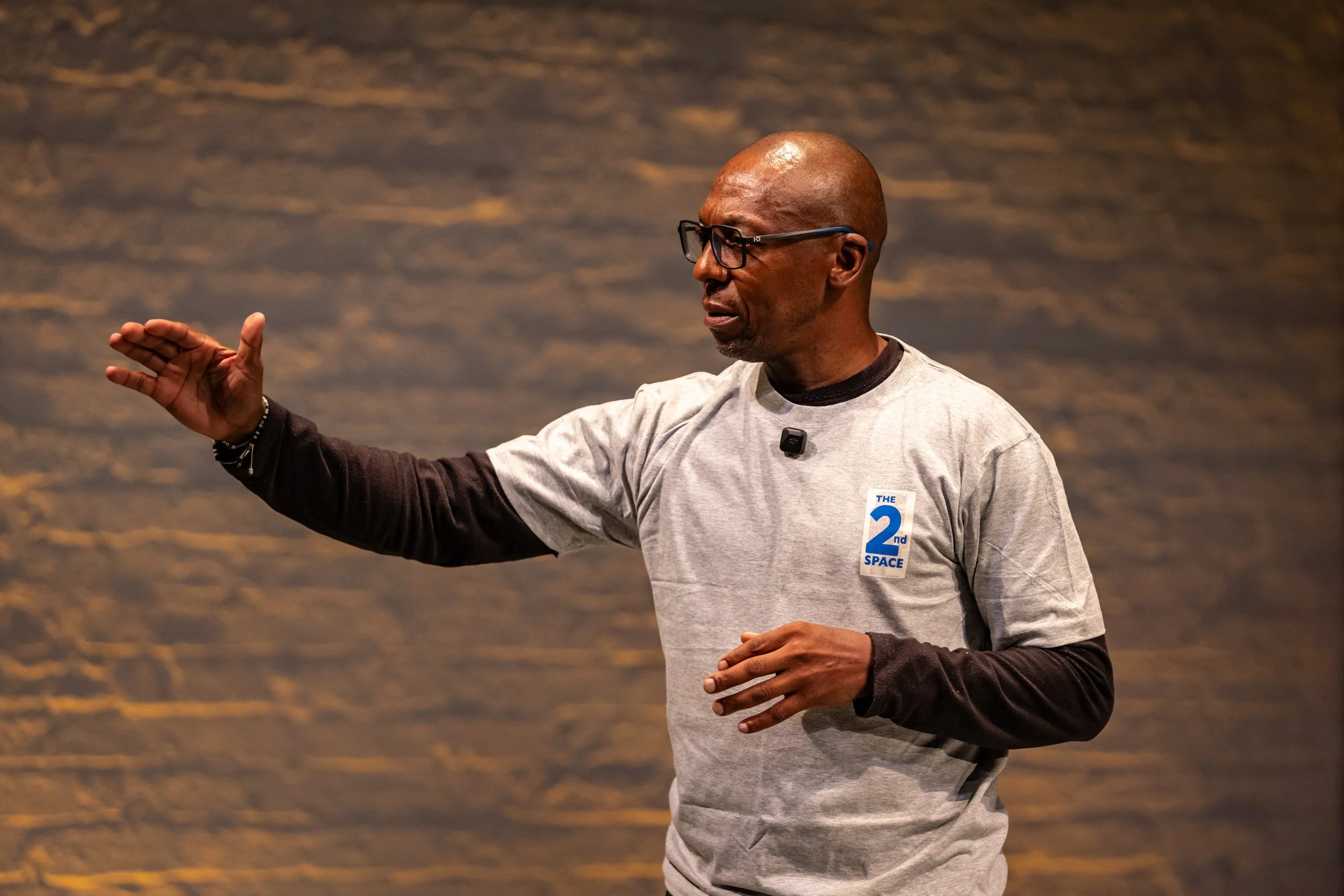
A descendant of a long line of Sangomas, Mantsoe participated, from childhood, in traditional song and dance rituals. Photographer | Zivanai Matangi.
In 2025, SO | The Academy for the Less Good Idea hosted the five-day workshop Thinking in Mafube, led by internationally renowned choreographer, performer and teacher, Vincent Sekwati Koko Mantsoe. The workshop, which culminated in an Open Moment, served as an early incubation for a work-in-progress performance choreographed by Mantsoe.
This was Mantsoe’s first time working with The Centre, and saw him developing the work with five young Johannesburg-based dancers – Smangaliso Ngwenya, Musa Mpongo, Thandiwe Mqokeli, Phumlani Mndebele and Thulisile Binda – and the percussionist, Micca Manganye, made possible with support from the French Institute of South Africa (IFAS). Though the workshop was grounded in the act of making a work, it was also a unique learning opportunity, with each performer being immersed in Mantsoe’s technique.
Thinking in Mafube is an exploration of, among other things, the Moropa drum as a sacred and foundational sound that heralds the arrival of a new dawn.
In Mantsoe’s words: “Dawn/Mafube represents a powerful force, a time when nocturnal spirits celebrate the past and future, drawing inspiration from the cosmos and embodying a profound connection to the universe and nature.”
KOBA AS A PHILOSOPHY OF BEING
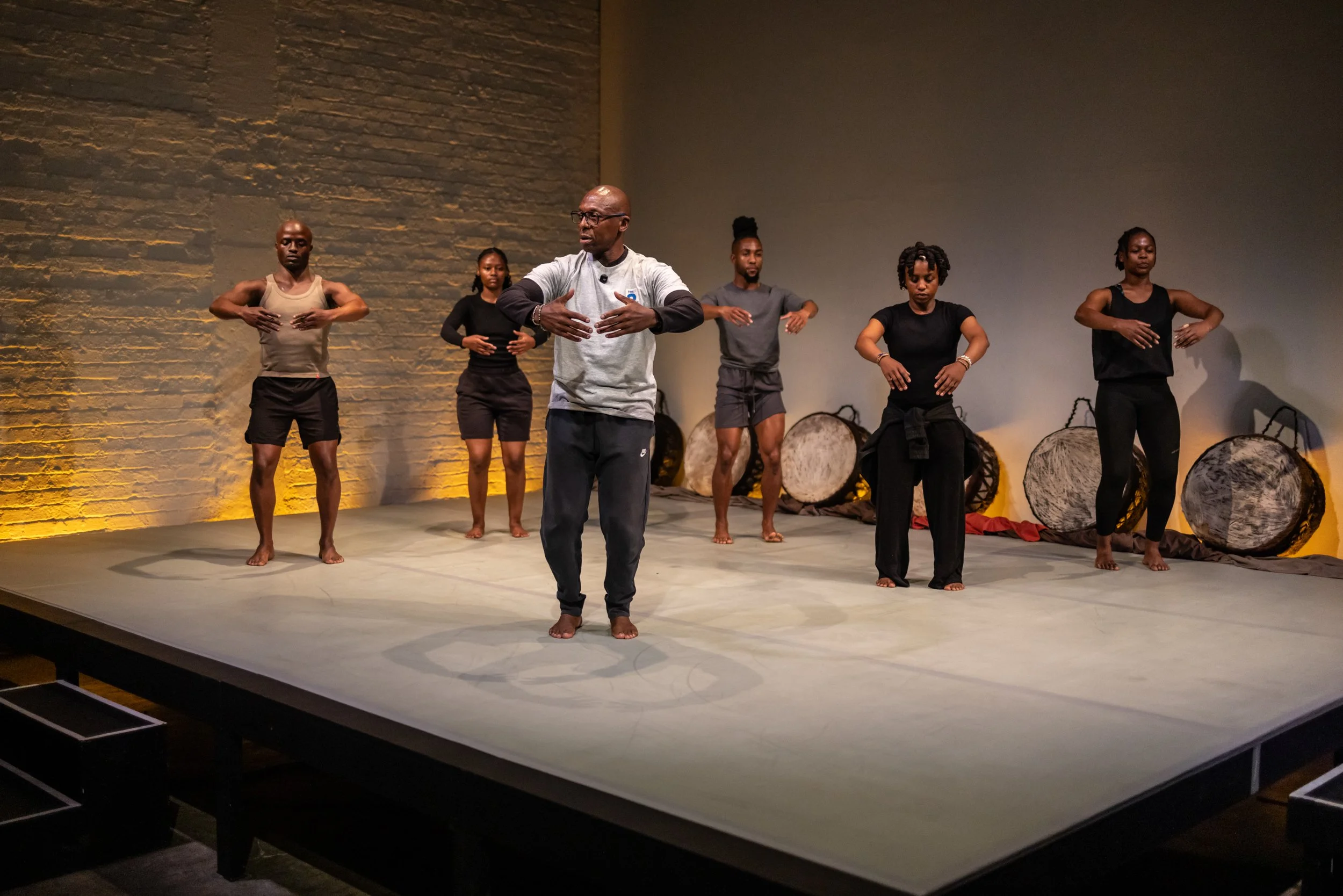
Meaning “to bend”, Koba is the physical process of bending one’s knees and for Mantsoe, it’s a process he first witnessed through his grandmother. Photographer | Zivanai Matangi.
The workshop opens with a grounding exercise. Where are our bodies, asks Mantsoe? In which context, what material, spiritual environment are they situated? He begins by drawing attention to the body’s connection to the ground – “We are standing on a wooden dance floor, beneath this, concrete, beneath that, the earth itself.”
With this mental, spiritual, and physical connection between body and earth, Mantsoe introduces the concept of Koba.
“Koba is a ritualistic waking up of the body through dance and physicality. The body wakes up through a kind of calling, a sense of urgency, direction, and responsibility,” explains Mantsoe.
Meaning “to bend”, Koba is the physical process of bending one’s knees and for Mantsoe, it’s a process he first witnessed through his grandmother who would wake up early each morning, go out into the yard, bend, and begin to sweep. In this everyday act of cleaning one’s household, Mantsoe recognises a powerful process of cleansing the past, and inviting newness into the body.
Importantly, Koba is also an act of communicating with one’s ancestors, or with the spiritual realm. For Mantsoe, the chest is the site that connects us to the world, and so the act of bending down and bending over – places one’s chest over the ground – opens up a door for this communication with one’s ancestors to take place. “Hence, the physical meditation of Koba,” says Mantsoe.
BRINGING IN THE DAWN
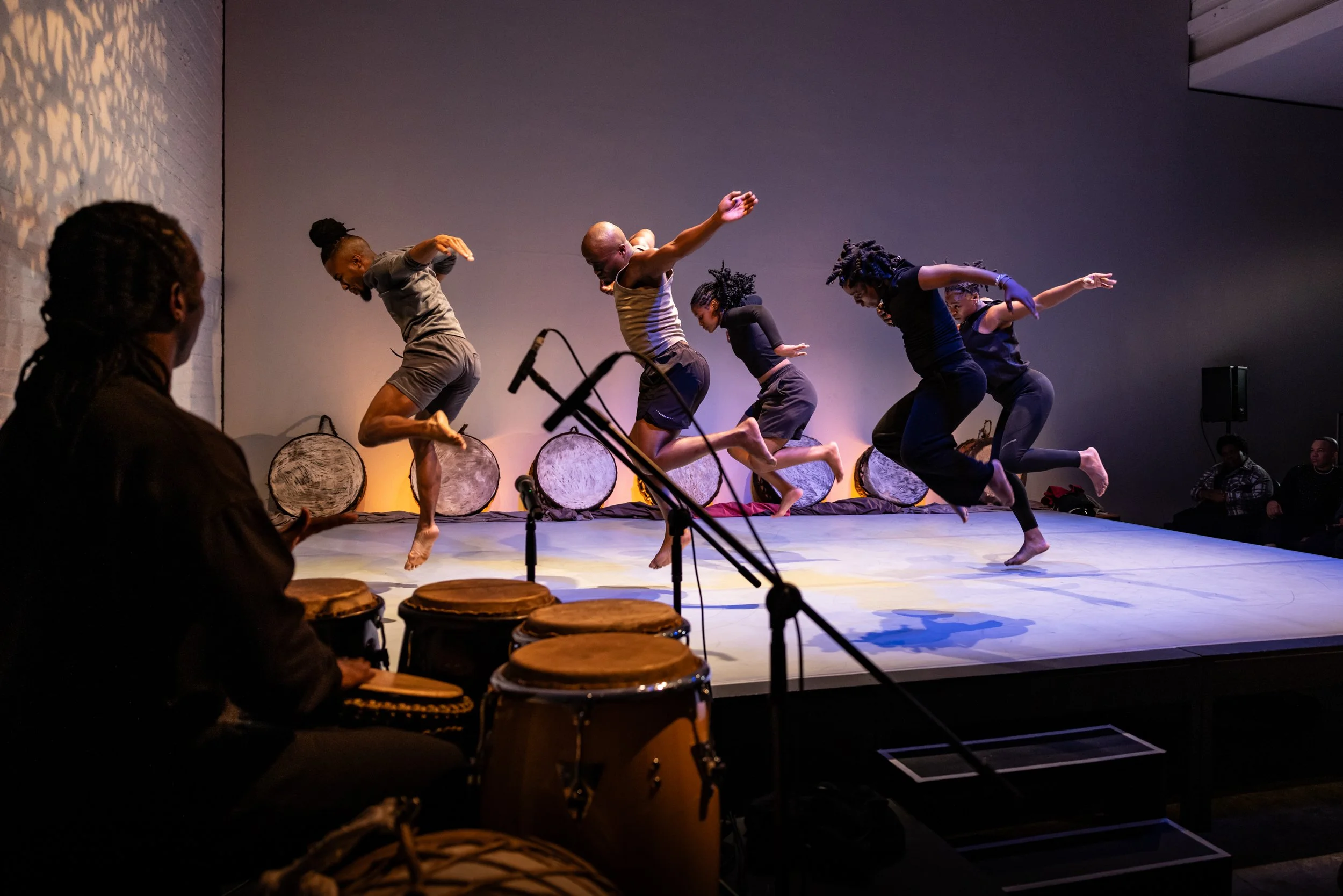
“Our body has rhythm inside it. How do we compliment the rhythm of the drum with our own rhythm? It’s about creating space in your body for those other rhythms,” says Mantsoe. Photographer | Zivanai Matangi.
Linked to this notion of cleansing the past and inviting in renewal, is Mantsoe’s interest in Mafube, or “Dawn”.
In working with these dancers, and with the rhythmic percussion of Manganye, Mantsoe’s process is one of inviting dawn – which itself is representative of newness, and of cleansing the past – into the body. And so it becomes an embodied process of channelling energy through physicality to form the foundations of the work.
Everything Mantsoe does is in collaboration with the cosmos. A descendant of a long line of Sangomas, Mantsoe participated, from childhood, in traditional song and dance rituals.
As a dancer who has largely performed solo over the course of his career, the power of his work is derived not only from his profound absorption of other dance styles, but also the spirituality of his creative process, which he describes as ‘borrowing’ from his ancestors.
For Mantsoe, the human relationship to nature is essential. It is inextricably linked and mutually generative. By acknowledging one’s place in nature, explains Mantsoe, we can begin to identify the space we need to make for the materials, the spirits, and the rhythms of nature that we invite into our bodies.
“Our body has rhythm inside it. How do we compliment the rhythm of the drum with our own rhythm? It’s about creating space in your body for those other rhythms. Amadlozi also have their own rhythms so it’s about making space for that, too,” says Mantsoe.
Ultimately, it is a way of planting universal concepts of dance and movement in the body through acknowledging one’s environment and how the body is connected to that environment. It’s this approach that informs the structure of much of the workshop and resultant Open Moment, too. By workshopping and generating solo material for each dancer, informed by their particular ways of engaging with and interpreting Mantsoe’s technique, and their engagement with the spiritual and physical world, the foundations of the performance begin to emerge.
THE OPEN MOMENT | THINKING IN MAFUBE
On Friday 18 July, The Centre for the Less Good Idea presented The Open Moment | Thinking in Mafube.
Here, Mantsoe leads the audience through his grounding philosophy of Koba, the concept of Mafube/Dawn, and some of his key principles of working with the body, including simplicity, resistance, and elasticity.
Together with dancers Smangaliso Ngwenya, Musa Mpongo, Thandiwe Mqokeli, Phumlani Mndebele and Thulisile Binda, and the percussionist, Micca Manganye, Mantsoe shows his work in progress with the audience.
– David Mann
CREDITS:
CONCEPTUALISER & CHOREOGRAPHER | Vincent Manstoe
PERFORMERS | Smangaliso Ngwenya, Thulisile Binda, Thandiwe Mqokeli, Phumlani Mndebele & Musa Mpongo
MUSICIAN | Micca Manganye
MOMENTEUR FOR THE SO ACADEMY | Athena Mazarakis