THINKING IN DIRECTING
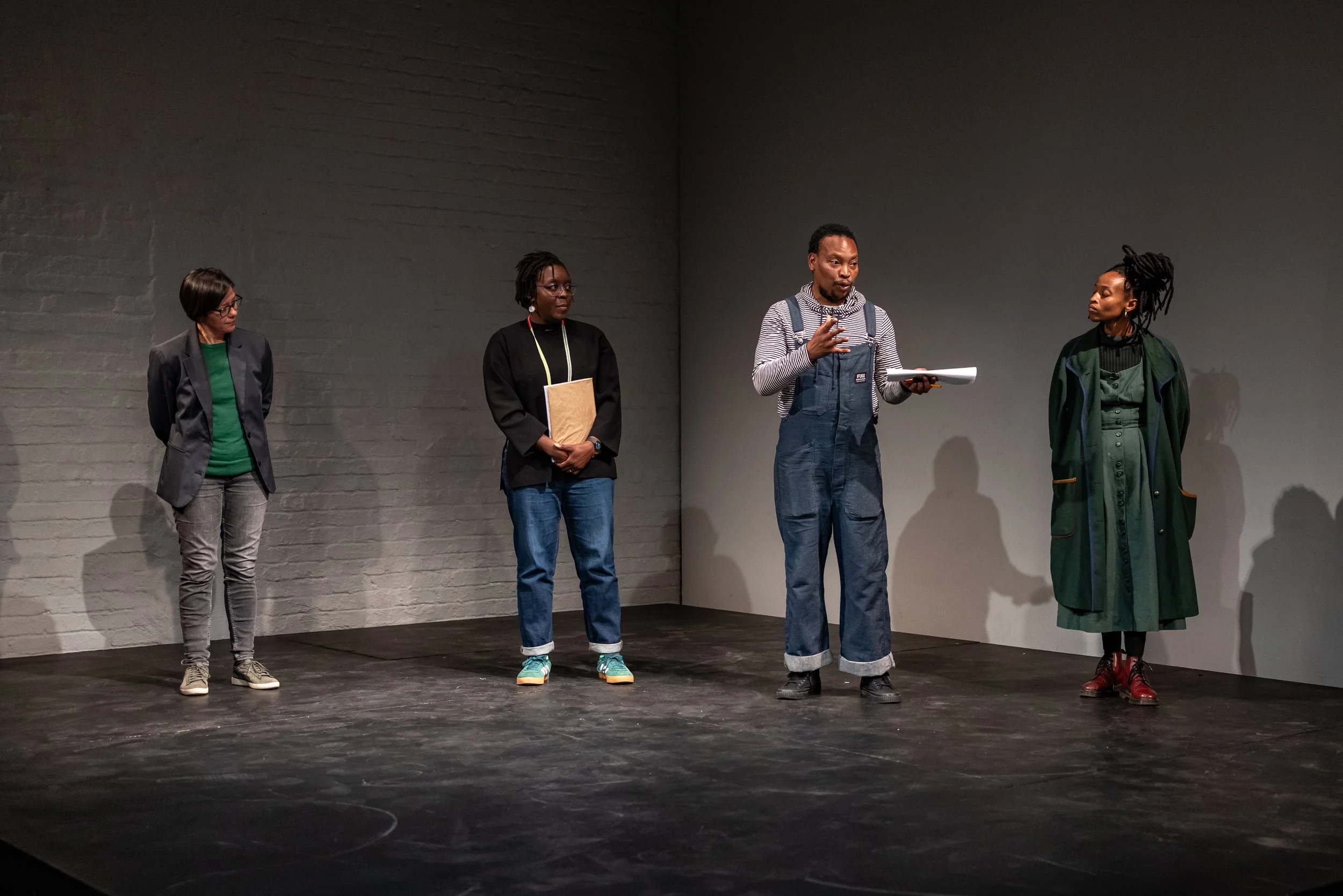
L-R: Athena Mazarakis, Mwenya Kabwe, Vice Monageng & Qondiswa James at The Open Moment | Thinking in Directing. Photographer | Zivanai Matangi
“The text is now material in the room. It leaves the page and lands somewhere – the body. So, that generative process of making is being surfaced through this physical, collective engagement with the material.” – Athena Mazarakis
In 2025, SO | The Academy for the Less Good Idea presented Thinking in Directing, a five-day mentorship led by renowned directors and theatremakers Mwenya Kabwe, Monageng Vice Motshabi, and Qondiswa James.
The mentorship took place from 11 to 15 August 2025 at The Centre for the Less Good Idea and saw six selected participants entering into a mentorship process led by Kabwe, Motshabi, and James, allowing for three unique directorial perspectives and approaches.
The second in a series of interlinked programmes aimed at addressing the fundamentals of South African theatremaking, Thinking In Directing saw participants working with three selected scripts that emerged from the Thinking In Writing programme, earlier in the year.
Thinking In Directing culminated in The Open Moment, which took the form of a public showing and provided an opportunity for an audience to witness the material and experiments explored throughout the mentorship, including showings of short extracts from the scripts, directed by the mentees.
The six participants of Thinking In Directing were Chris Djuma, Lea Seekoe, Noluthando Mpho Jupiter Sibisi, Mlindeli Zondi, Aalliyah Zama Matintela, and Mbali Ndlozi.
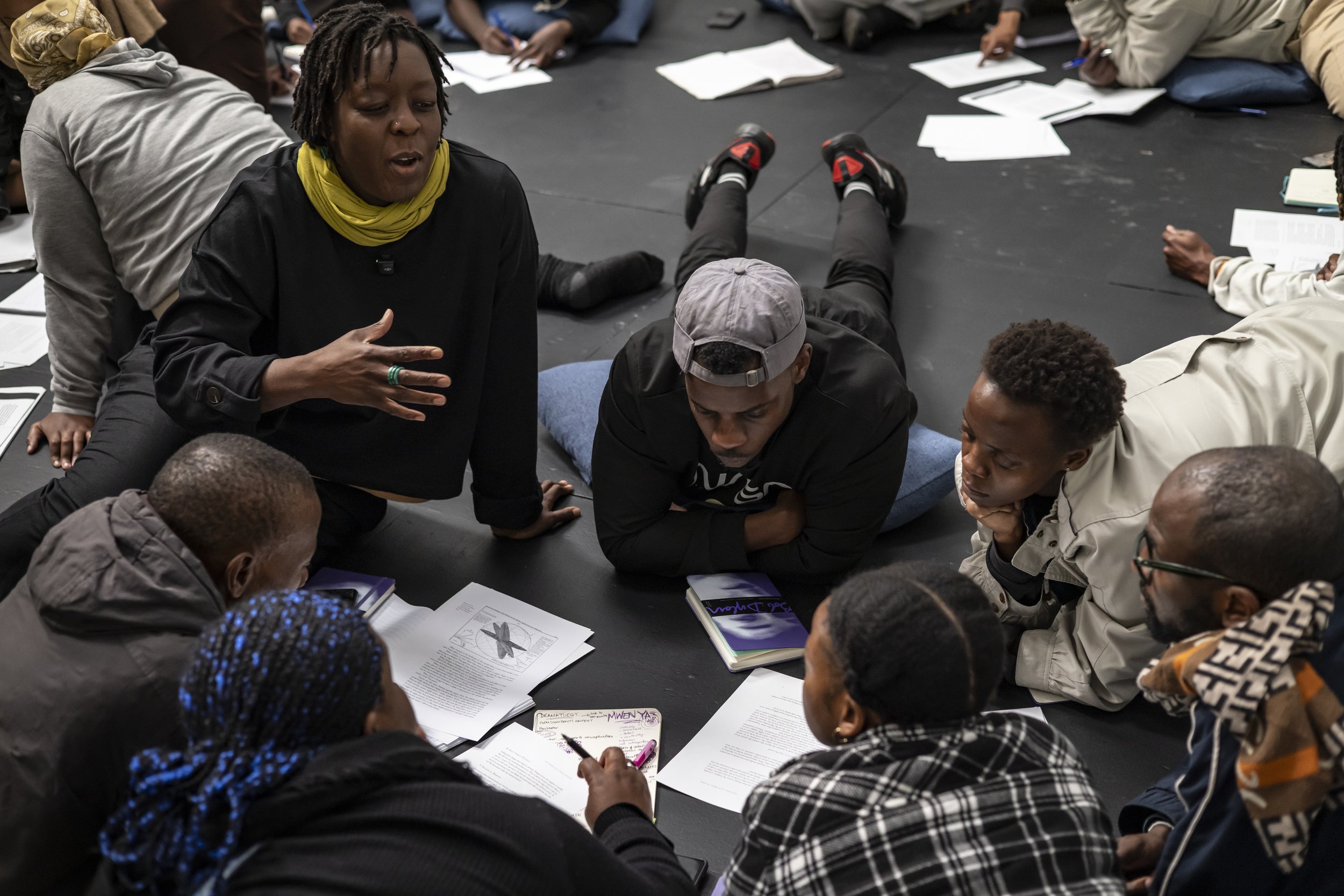
Mwenya Kabwe leads participants through exercises designed to help participants engage the dramaturgy of the play. Photographer | Zivanai Matangi.
MWENYA KABWE | APPROACHING THE WORLD OF THE PLAY WITH CURIOSITY
For Mwenya Kabwe, the role of the director is closely related to how they engage in the dramaturgy of the work. The director-dramaturg, she explains, is many things – researcher, editor, overseer, storyteller – but they are primarily a facilitator for creative inquiry.
Over the course of the Thinking In Directing workshop, Kabwe leads participants through a series of small exercises, some stemming from plays she has worked on, such as Nadia Davids’ Hold Still, and all within the framework of the director-dramaturg. Among these are exercises in ways of seeing, in thinking through detail, mindfulness, and presence. Similarly, an exercise in focusing on the formal qualities of an ordinary object – its material, line, form, colour, and more – becomes a way of setting aside one’s opinion, and “not letting the story get out in front of you.” Thinking through the world of the play by creating an informal installation of objects also helps to give the participants a sense of how one might feel, think, and move through the play, and the decisions they’d make inside of the world of the play.
But it is the text EF's Visit to a Small Planet: Some Questions to Ask a Play by Elinor Fuchs, that informs all of these questions and exercises. “Take the play, and in your imagination, scrunch it up, put it in your palm, hold it out and imagine it as if it is a world,” says Kabwe. She goes on to explain that the exercise is about being a curious visitor to this world of the play and asking it a series of questions, such as: How does time work in this world? How does space, power, and language work? “What this does is it allows us to not assume that the world of the play operates with the same rules as our world, and it allows us to approach the play with curiosity and a set of guiding questions.”
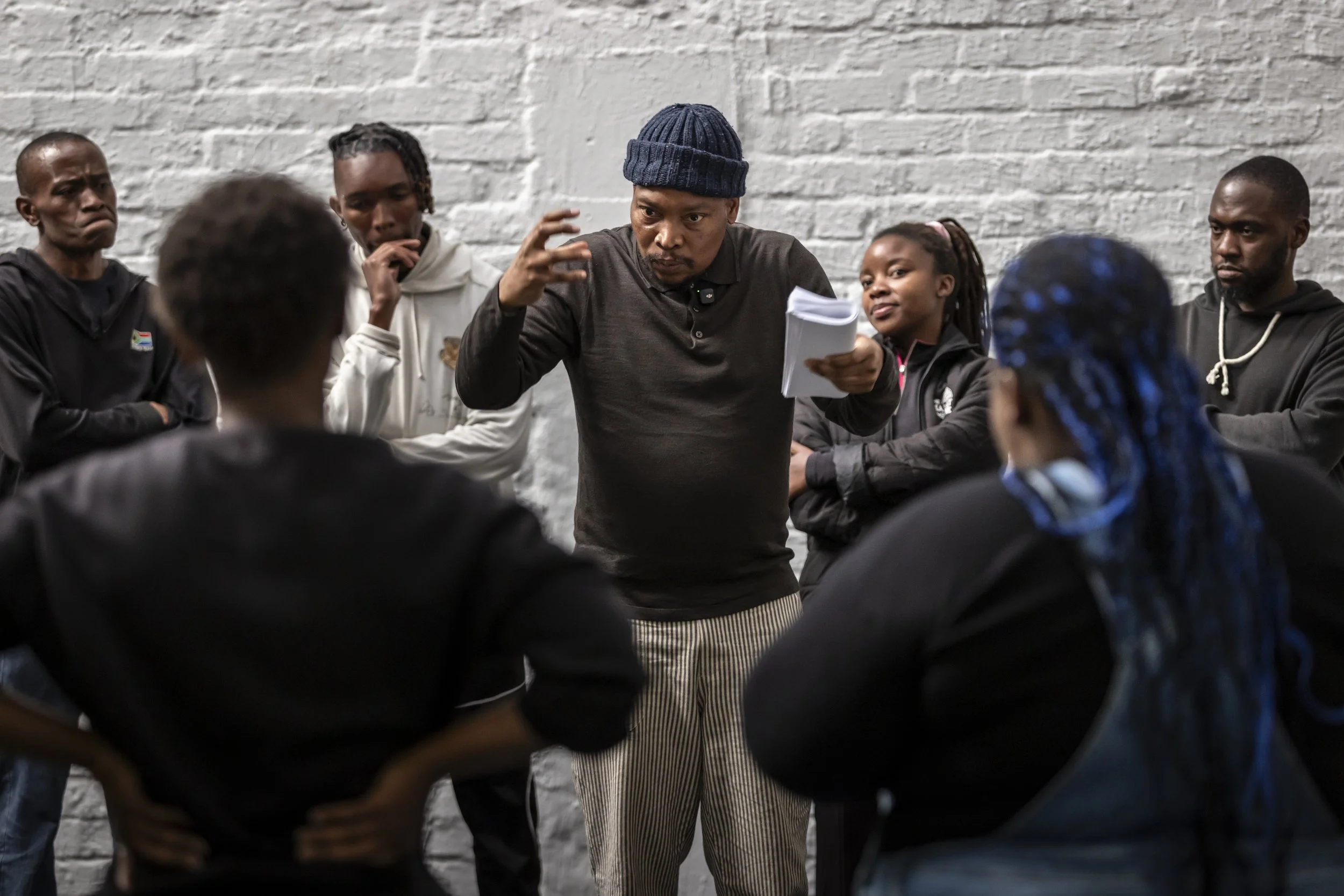
“It’s a process of externalising the character to find out who they are.” — Vice Monageng. Photographer | Zivanai Matangi
VICE MONAGENG | SHAPING ENERGY ON STAGE
Where Kabwe’s approach allows one to break from the world and journey into the interiority of the play, Vice Monageng’s approach then took participants out of the play, and into the world.
“I think a director is someone who orchestrates or facilitates how energy is shaped on the stage; that’s the primary relationship,” says Monageng. Using South African playscripts as material, Monageng takes participants through exercises designed to explore how meaning is controlled or not controlled in a play through the characters – their intentions and decisions – and to interrogate “who these people are, why they’re here, and why they might say the things that they say.”
Monageng’s approach also draws from and encourages the use of Actioning as presented in the book Actions – The Actor's Thesaurus by Marina Caldarone and Maggie Lloyd-Williams, as a directorial tool that simplifies communication, presence, and intention with actors through the simple exercise of working with words and their intentions, and translating physical actions into psychological actions. In this way, Monageng explains that, “Who people are can be determined by what they want and how they go about getting it. It’s a process of externalising the character to find out who they are.”
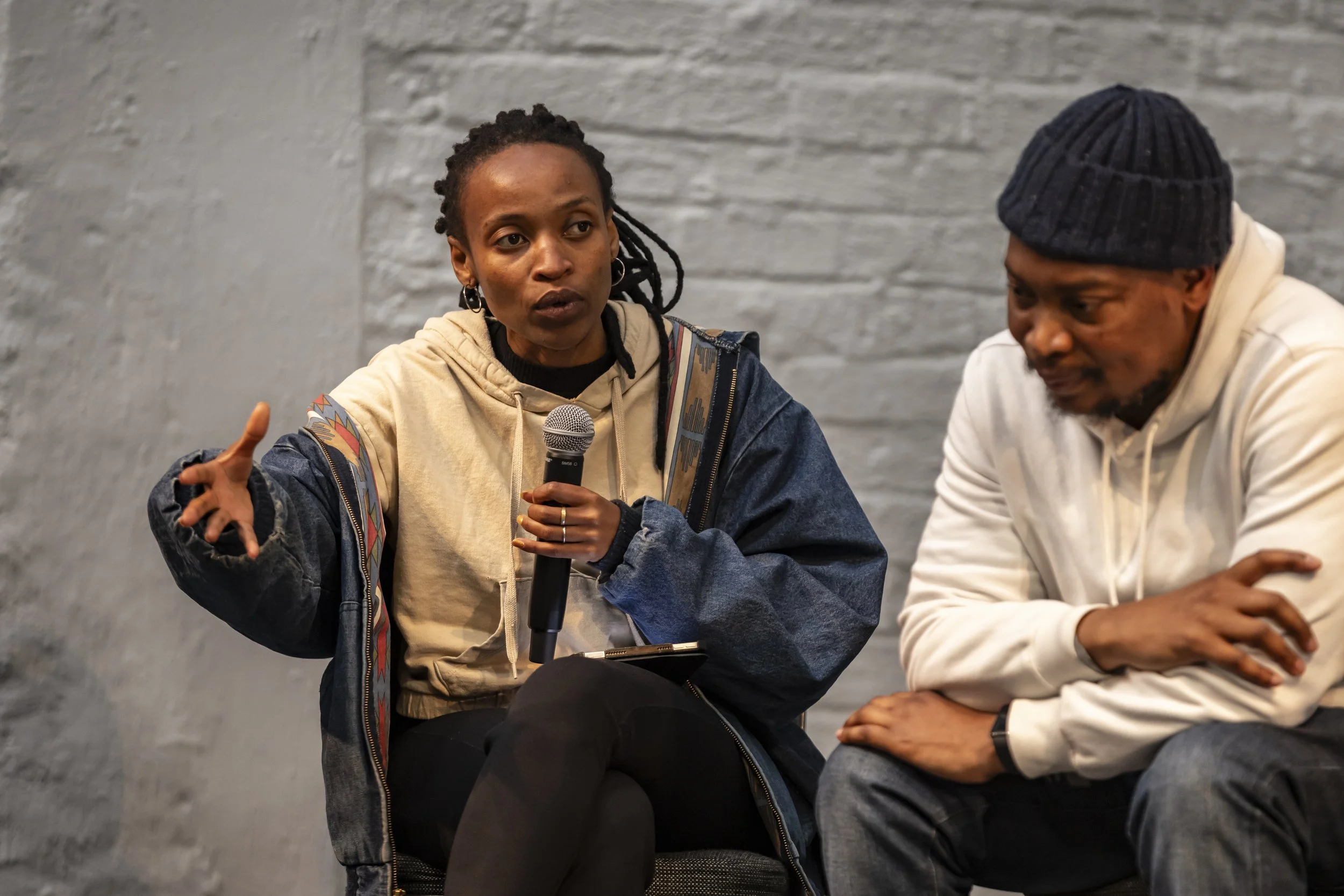
Central to Qondiswa James’ approach is the idea of Viewpoints — a way of analysing and generating movement and performance. Photographer | Zivanai Matangi.
QONDISWA JAMES | THE BODY AS PRIMARY COMMUNICATOR
Following Kabwe and Monageng’s workshops with the participants, Qondiswa James leads with an emphasis on the ensemble, and how bodies relate to one another. Here, James’ focus is on body positions on stage, and how this creates certain dynamics, and contributes towards meaning and relationships in the space before the mention of text.
Central to James’ approach is the idea of Viewpoints, a technique developed by American theatre director Anne Bogart and her collaborator, Tina Landau. A system for analysing and generating movement and performance, Viewpoints is based on the idea that the body, as James also sees it, is the primary source of creativity and expression.
By placing performers on stage, and asking participants to engage in an exercise of collective viewing, James cycles through the various ways in which a simple change in stance, gesture, and positioning of the body, can begin to tell a story.
WORKING ALONGSIDE THE TEXT
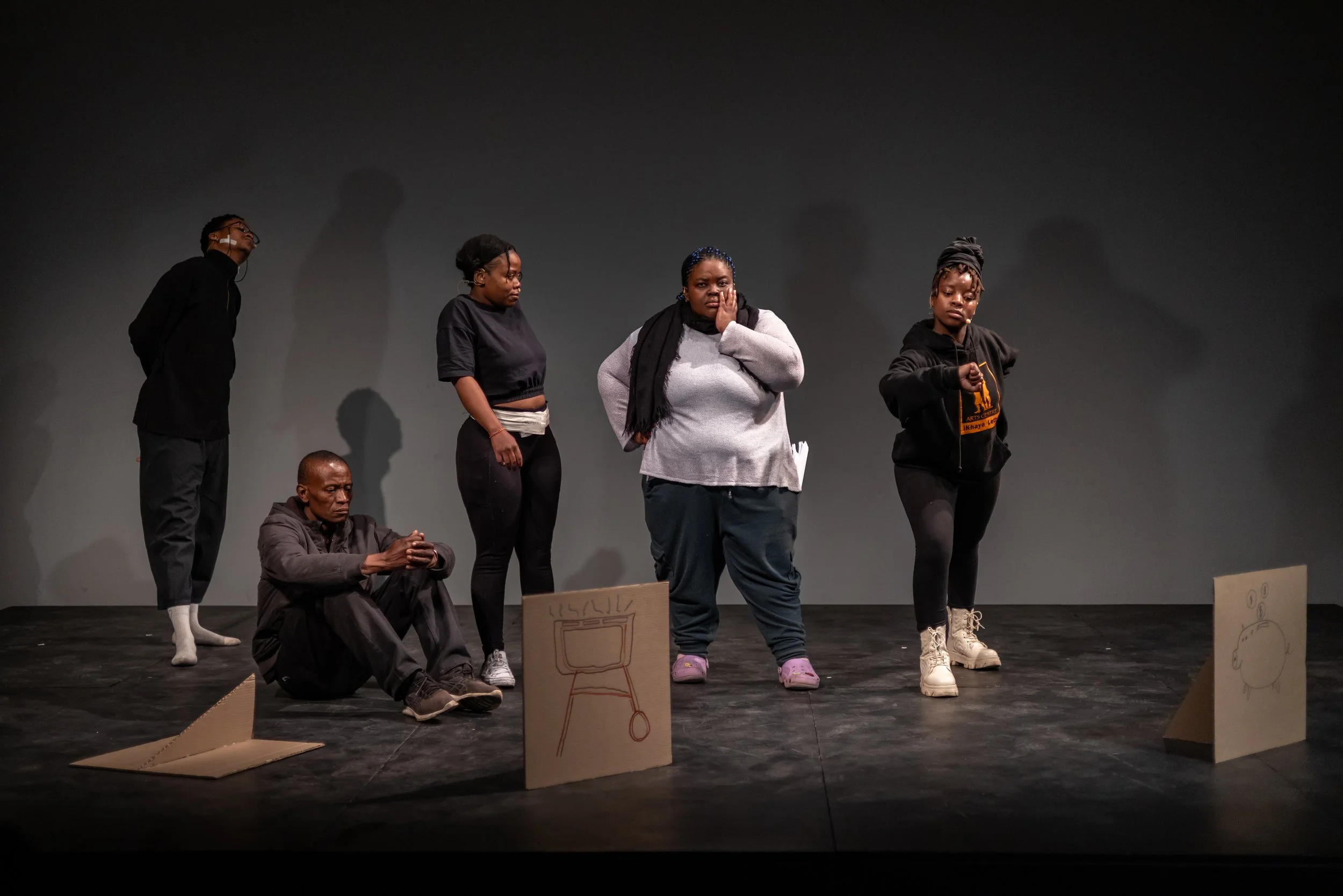
Participants explored a series of key motifs to uncover certain dynamics that they wanted to surface in the work. Photographer | Zivanai Matangi.
Following focused moments and exercises with each of the directing mentors, participants began to work on their assigned scripts, and spent the rest of the week testing these new ideas and approaches through short directed extracts. As is often the case at The Centre, these extracts were viewed collectively, and shaped collaboratively, with the mentors and participants, as well as members of The Centre team, providing thoughts, feedback and generative critique on the work.
Alongside this process of developing their extracts, the participants continued to explore, individually, the set of creative tasks given to them by the mentors. Here, they didn’t work directly on the text, but worked to understand the play through object and scenographic explorations, as well as short solo performances zoning in on a key motif – the act of running up and down a set of stairs, responding to emails, or slowly donning a jacket with a set of shoes fixed to the back – to uncover certain dynamics that they wanted to surface in the work.
THE OPEN MOMENT
On the evening of Friday 15 August, SO Academy presented The Open Moment | Thinking in Directing, a public showing by the mentors and participants of the programme that allowed for an audience to witness the material and experiments explored throughout the week.
Shaped by the three mentors and Momenteur for the SO Academy, Athena Mazarakis, The Open Moment featured the key insights and exercises of each of the mentors, namely Kabwe’s emphasis on dramaturgy and her way of approaching the world of the play with curiosity, Monageng’s use of Actioning and his interest in intention and shaping energy on stage, and James’ use of Viewpoints which sees the body as the primary communicator.
The Open Moment also saw the participants demonstrating their directing styles and techniques, through short performative extracts of the scripts they were assigned. Two versions of each of the three scripts were shared, interspersed with live feedback, and dialogue with the mentors and participants.
In this way, it became possible to trace, through these myriad ways of engaging a set of playtexts, the week-long process of working with the text as material, utilising the exercises of the mentors, and incorporating collective feedback.
— David Mann
CREDITS:
DIRECTING MENTORS | Mwenya Kabwe, Monageng Vice Motshabi & Qondiswa James.
DIRECTING MENTEES | Chris Djuma, Lea Seekoe, Noluthando Mpho Jupiter Sibisi, Mlindeli Zondi, Aalliyah Zama Matintela and Mbali Ndlozi
PERFORMERS | Jaden Mmokwa Oratile Mosadi, Katleho Jack Moloi, Kefentse Mokoena, Luyanda Ntombela, Nomsa Myth Tavarwisa, Pertunia Mpumelelo Msani, Siyabonga Radebe, Toby Ngomane, Sami Maseko, Khanyisile Ngwabe, Katlego Letsholonyane & Bongile Lecoge-Zulu
PLAYWRIGHTS | Nolwazi Mahlangu, Uvile Ximba & Mongezi Ntukwana
MOMENTEUR FOR THE SO ACADEMY | Athena Mazarakis