HOW | SHOWING THE MAKING: MILISUTHANDO BONGELA-DAVIS
“The South African filmmakers of today… we’re trying to articulate what it is we’re going to say, now that [the medium] is in our hands… I’m trying to, as much as I can, name what happened for us and with us so that it can be added to the canon, next to other forms and styles of filmmaking.” – Milisuthando Bongela-Davis
On Wednesday 23 April, The Centre for the Less Good Idea presented HOW | Showing the Making, with writer and filmmaker Milisuthando Bongela-Davis.
This HOW focused on the evolution of Bongela-Davis’ concept of Nguni cinema through the making of the film Milisuthando, not merely as a filmmaking aesthetic, but as a philosophy and approach. A screening of the film followed a short interval.
“NOBODY EVER TOLD YOU A BEDTIME ISSUE”
The Centre is filled with notes. Projected, handwritten notes fill the walls alongside the stage, while printed out notes, readings, and archival photographs are tacked to the walls behind and alongside the audience. This is the first framing of Bongela-Davis’ documentary film, Milisuthando.
Bongela-Davis takes to the stage and opens her HOW with a bit of advice she picked up at a filmmaking laboratory in the United States in 2018: “Nobody ever told you a bedtime issue. We’re told bedtime stories.”
The point, explains Bongela-Davis, is that documentary filmmakers always want to take an issue and turn that into a story. Even though you may have a central issue or question you’re trying to answer, resolve, or elucidate, however, it must always be mediated through a story, must always be anchored in a narrative.
So, Bongela-Davis’ HOW becomes one that is narrated through a series of short stories.
NGUNI AESTHETICS
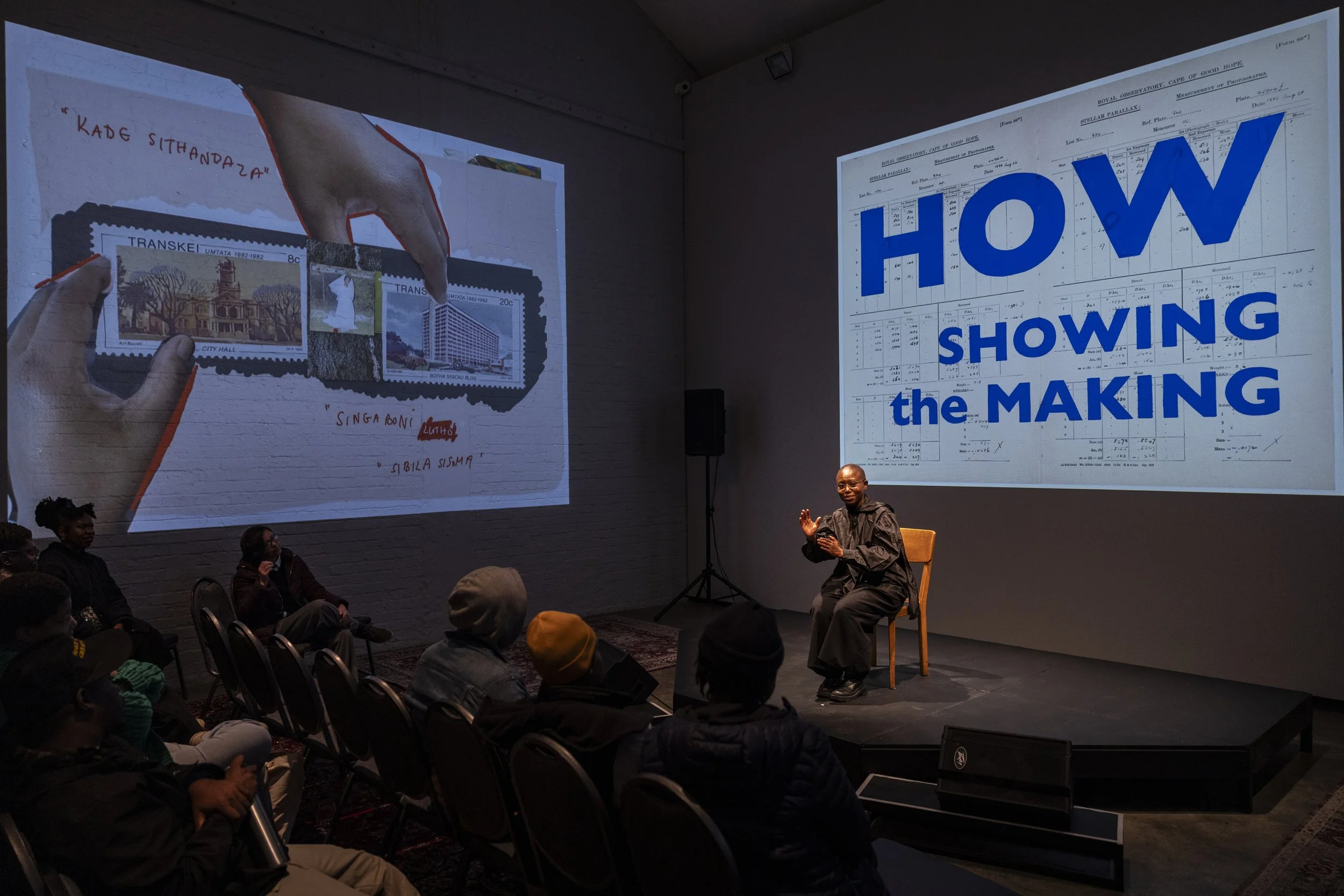
The first story is about Bongela-Davis’ time in high school, and her particular group of friends who called themselves the Bench Club. Projected behind her is a tightly cropped image of Black schoolgirls with interlinked hands and arms. Tucked into the school belt of one of these girls is a photograph of F. W. de Klerk, the last apartheid-era president. Through this group of high school friends, Bongela-Davis describes figuring out a certain way of relating to those around her, as a young black woman in a Model-C school.
“My interest is in our constitution,” says Bongela-Davis. “As aBantu, which sits underneath and alongside our identity as Black South Africans that was foisted upon us in a race-based society.”
These ways of sharing, sitting, looking, speaking, dressing and playing are not inherent, explains Bongela-Davis, they are taught by the environment we grow up in. And these are not overtly political modalities, but rather cultural modalities – an unwritten set of codes and ethics. The aesthetic choices and sensibilities in Milisuthando, then, are informed by an Nguni aesthetic. “The tone, the structure, and the spirit of the film is informed by Bantu and Nguni ethical codes, inside of which, art, politics, religion, medicine, science, governance, language, sexuality, spirituality, the economy and history are not separate.”
THE EGO CAN REST
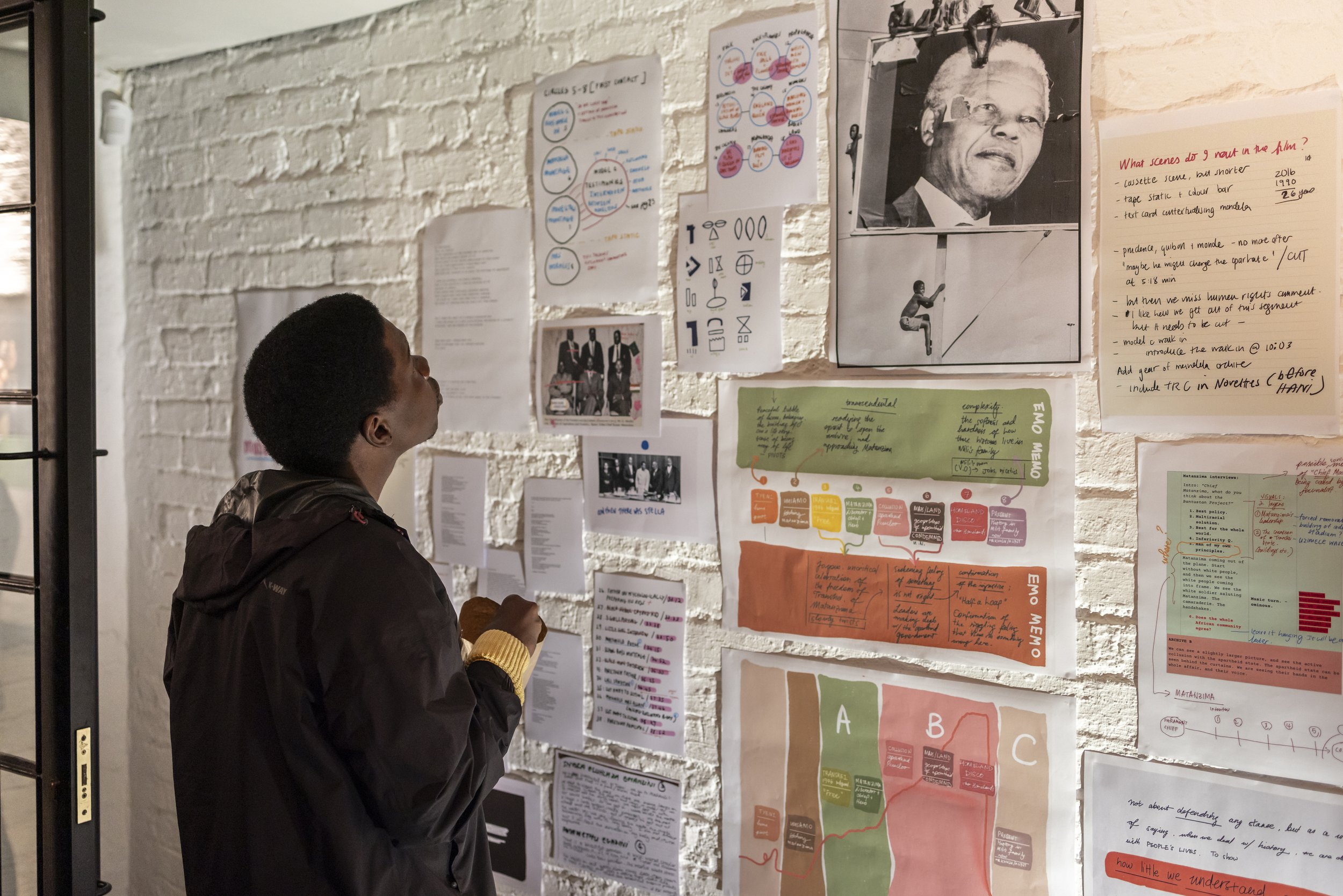
An image of Bongela-Davis’ father alongside the Lovedale Brass Band Quartet appears. Bongela-Davis explains that in Nguni culture, when you have a gift, it’s not yours alone, it’s in your lineage.
“Whether you’re a writer or a singer, that gift is in your lineage and it’s been passed down to you to preserve and protect and to share with the world. So in that sense, the ego can rest.”
In this way, explains Bongela-Davis, calling on a lineage of writers was a particular approach and methodology for the making of Milisuthando. What emerges is a collectively held and co-authored approach to documentary filmmaking.
A story about how her father, a school teacher, confronted difference, difficulty, and oppression, also serves as an instructional moment for Bongela-Davis. In working with difficult archival material, she explains, one has to find an alternative way into the material, to embrace its difficulty and complexity rather than becoming hardened or even co-opted by it.
On subversion
A third and final story about Bongela-Davis’ move from an apartment in Yeoville to one in Hyde Park in Johannesburg North, gives way to a reflection on navigating interpersonal relationships through the urban lens of class and identity.
A spirit and energy of subversion, explains Bongela-Davis, is something that they used in the making of the film, not simply in the treatment of the archival footage, but in their thinking around identity, race, intimacy and more.
And so, three anecdotal stories – three narrative vignettes – become the context and the framing for the audience as they view Milisuthando. These stories, each with a central idea, were put to work as an approach and a process, and allow for a more intimate understanding for how the film is made.
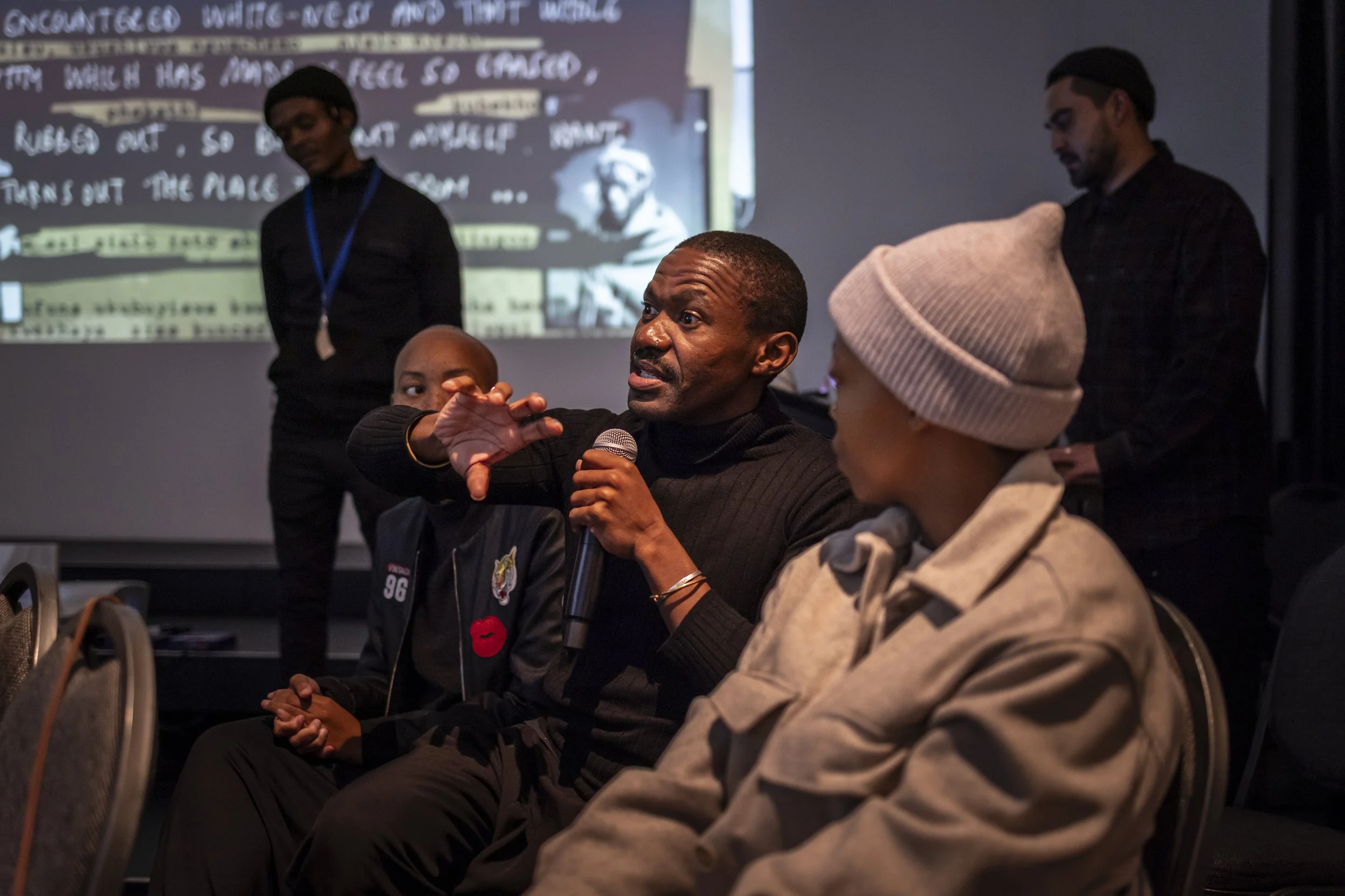
Following a screening of the film, a post-screening Q&A opens up discussions around balancing reverence and respect with experimentation, the importance of bringing a film like this and its material back home, and more.
CREDITS
FILMMAKER | Milisuthando Bongela-Davis
MOMENTEUR FOR THE SO ACADEMY | Athena Mazarakis