THINKING IN | EXPLOSION OF A MEMORY
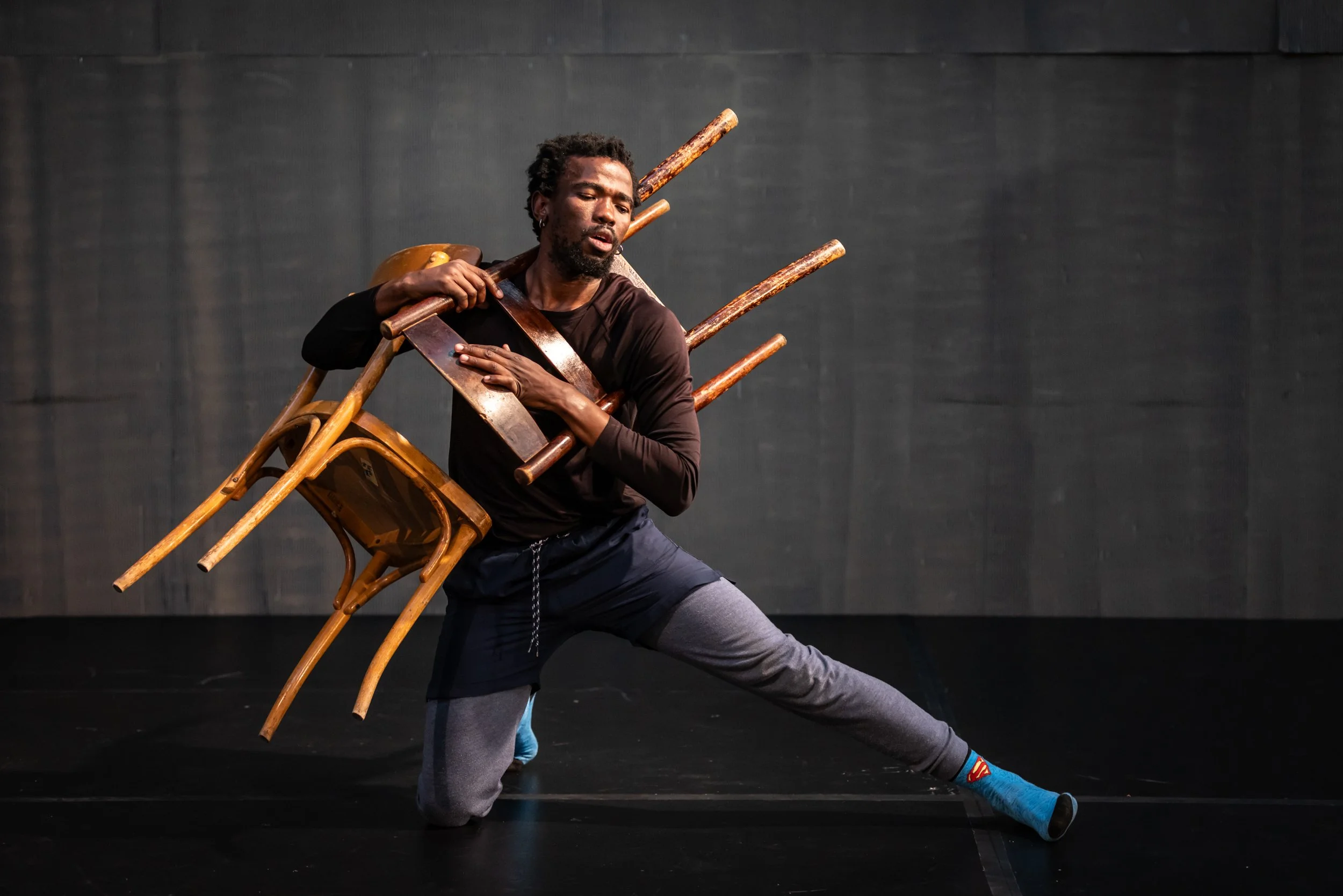
In June 2026, The Centre for the Less Good Idea hosted Thinking In Explosion of a Memory, a five-day mentorship led by Belgian artist and theatremaker Camille de Bonhome.
Having first encountered De Bonhome’s practice in 2021 through The TalentLAB in Luxembourg, The Centre became interested in engaging De Bonhome for a mentorship that would see her further exploring her practice here, while also sharing her unique approaches with South African artists and audiences. For this mentorship, De Bonhome took, as her point of departure, extracts of the 1984 play Explosion of a memory by Heiner Müller.
Over the course of five days, De Bonhome worked with Johannesburg-based artists to further test the play through repetition, exhaustion, and multiple languages to question, among other things, the relationship between violence and its representation, how we build images, how we change the meaning of an image, and how meaning is changed through the body.
SLOWING DOWN AND EMBODYING THE TEXT
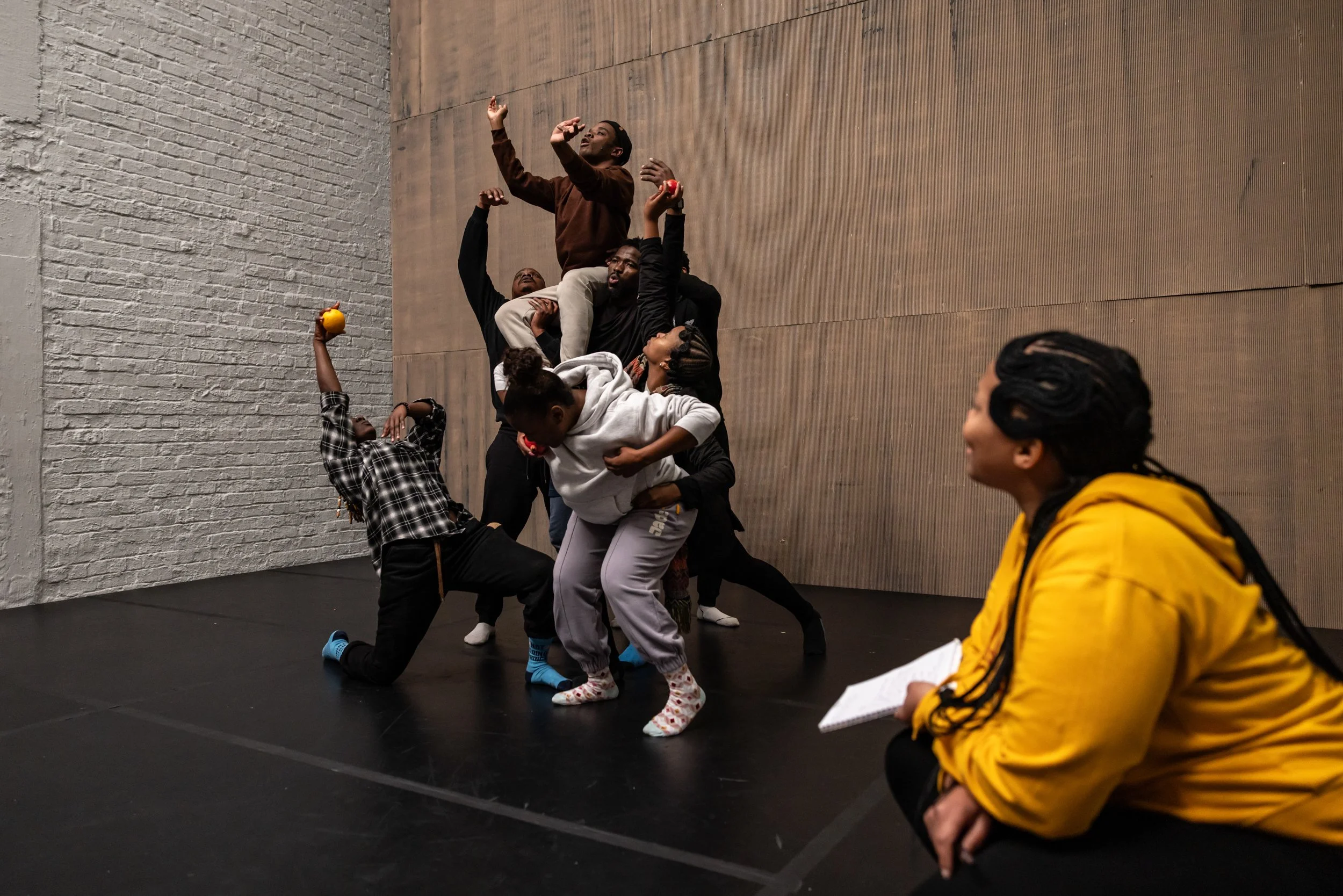
Beginning with a brief history of visual theatre in Brussels, De Bonhome’s framing of the mentorship is as much about working with Müller’s text as it is about finding the images associated with this text, and seeing what emerges as a directorial strategy.
An exercise in crafting a performative moment based on a single emotion sees the participants both performing and directing, finding the moment in their bodies, and observing and shaping this moment in the bodies of others. Soon, this grows into an ensemble exercise, and the act of collective decision-making – how to negotiate ideas and impulses in a shared manner, and knowing when to step back, when to lead – becomes the guiding idea.
Slowly, De Bonhome begins introducing the text – in short sentences or fragments – and using language as a loose provocation towards further embodiment. Individually, and in groups, the participants begin to build visual moments – performative vignettes – from the text, amassing a collection of visual fragments. It is from this collection that a greater image can be collaged and composed.
Repetition is key. De Bonhome gets the participants to perform their vignettes over and over, each time shifting the variables and seeing what emerges – without words, without sound, without emotion. Each iteration strips something away, clarifies something else. The relationship between text and body becomes clear in these exercises. It is evident both in how the body rises to the occasion for a particular text, and how it quietens itself for others.
FOCUSING ON THE SINGLE IMAGE
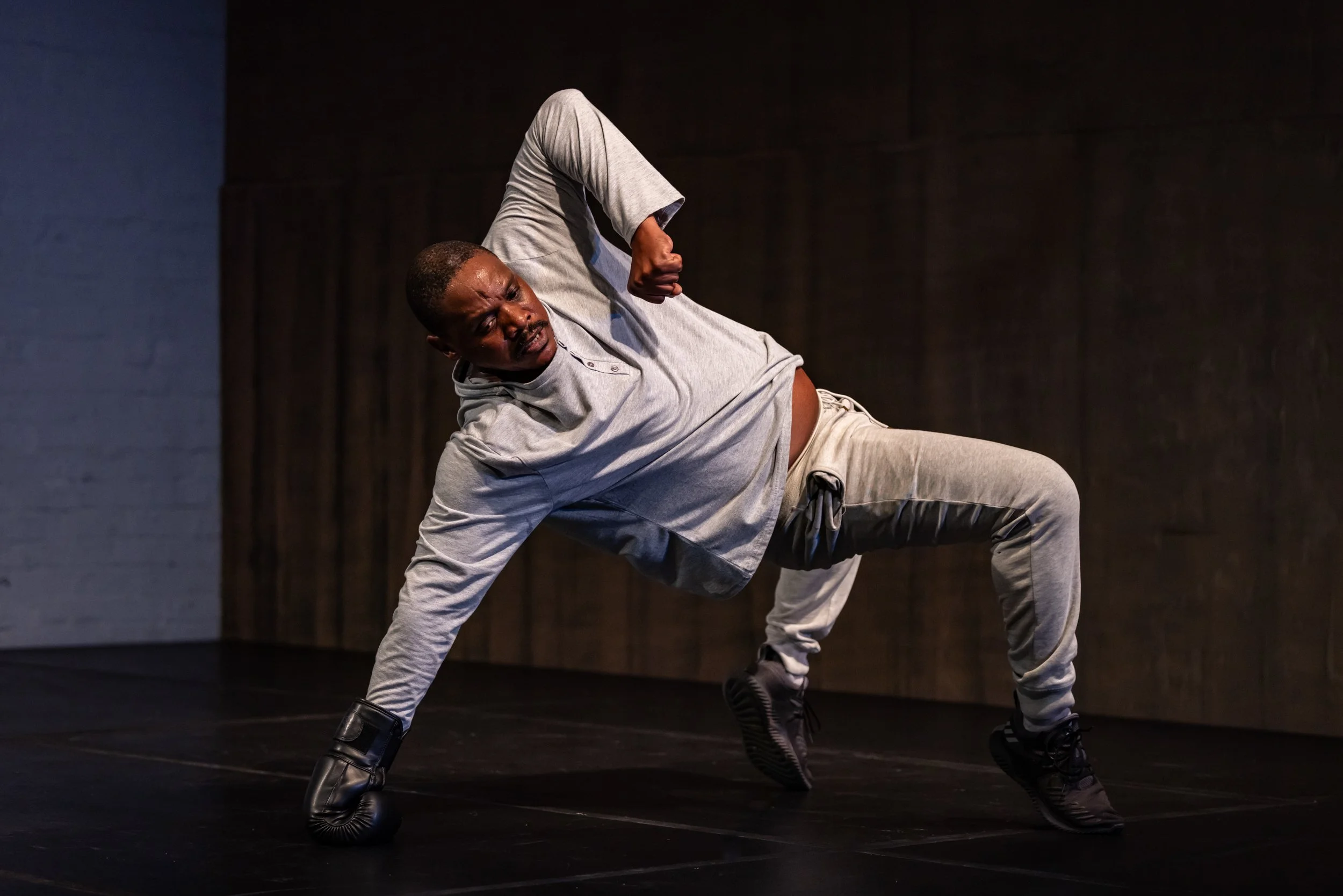
South African theatremaking, with its tendency towards collective making and ensemble work, doesn’t always take naturally to individual authorship, or an idea crafted in solitude. So, it is a uniquely generative challenge when De Bonhome asks participants to break from the collective, and to focus on the single idea, gesture, the solo performer, and to stay with the image, only.
The aim of such an exercise, explains De Bonhome, is to vignette our thinking – to focus in on a single image and explore it in granular detail, give it time and space, darken its edges so that only the most essential part of the image endures and clarifies.
To this, The Centre’s Momenteur, Athena Mazarakis, adds that the act of observation is equally generative. This act of staying with an image, stripping it, giving it time, is as significant to the viewer as it is to the performer. Do we gain an appreciation or understanding for this simplicity? Does the relationship between body and text become clearer?
Finally, it is the generative act of collaging with these distilled images that, after Müller, allows participants to do away with narrative linearity, and to stage the text anew.
THE OPEN MOMENT | THINKING IN EXPLOSION OF A MEMORY
On Friday 12 June, The Open Moment featured a combination of these experiments, learnings, and early outcomes of the mentorship, offering a live audience the opportunity to witness some of the processes of the mentorship.
Taking to the stage all dressed in blue overalls and glasses – an homage to Müller – the participants share their surreal patchwork of language and movement. De Bonhome watches all the while, directing and shaping the individual performances at key moments.
Throughout the Open Moment, De Bonhome speaks to her choice to work with Müller’s text, what it means to be led by image, motif, and contradiction, and how planting ideas inside of a performance through the act of embodying the text, is at the heart of a process like this.
– David Mann
CREDITS:
MENTOR | Camille de Bonhome
PERFORMERS | Campbell Meas, Fana Tshabalala, Itumeleng Moeketsi, Jaden Mosadi, Thabang Chauke, Katlego Jack Moloi, Mlungisi Tshobeka, Nolwazi Mahlangu, Nomsa Myth Tavarwisa, Nomsa Tina Mavuka & Slindile Mthembu
MOMENTEUR | Athena Mazarakis
PHOTOGRAPHER | Zivanai Matangi
Thinking In Explosion of a Memory is made possible with the support of Fédération Wallonie-Bruxelles, Service Général de la Création Artistique – Direction du Théâtre